
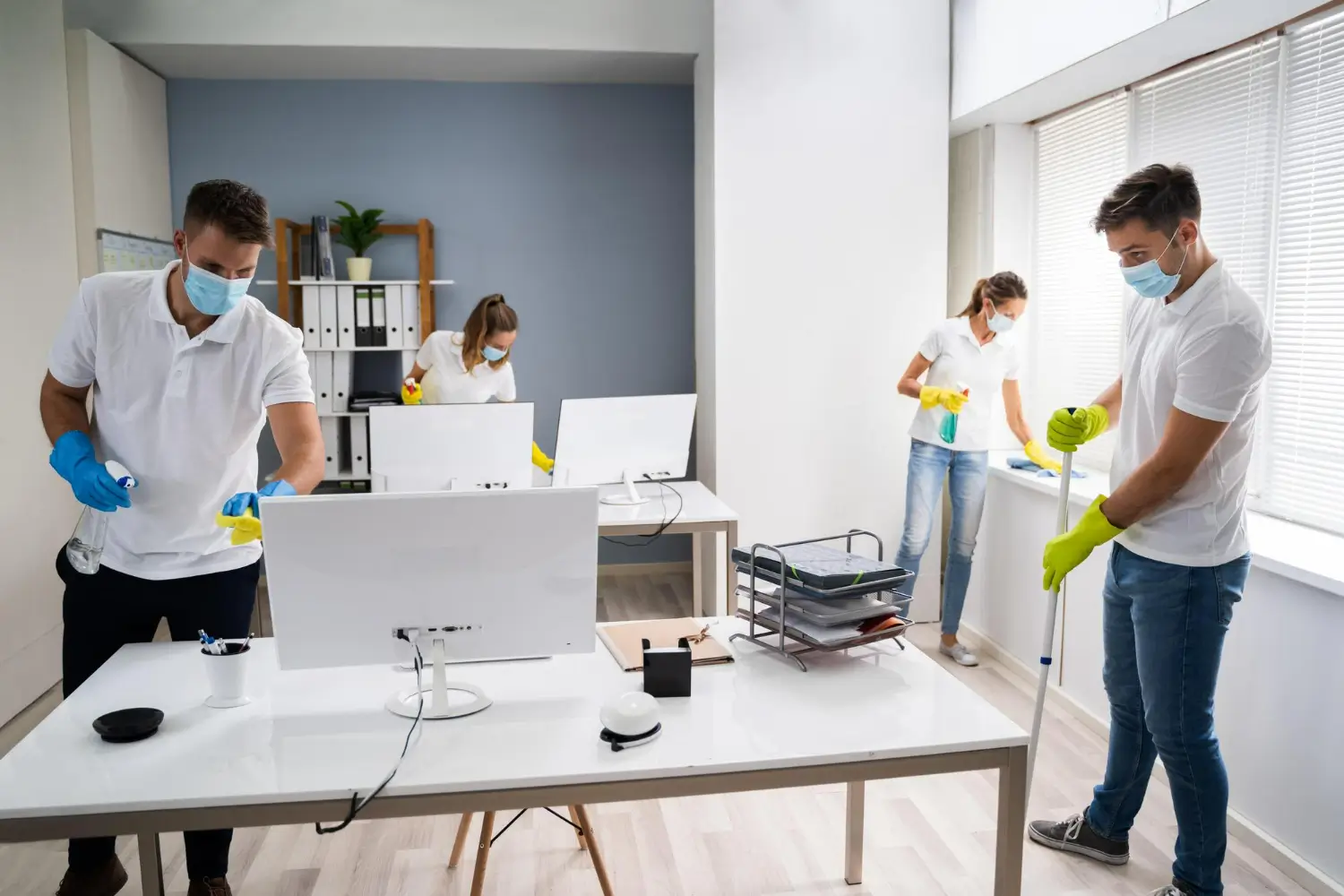
In a San Francisco medical office, the cleaning crew should handle housekeeping surfaces such as floors, walls, counters, waiting room furniture, restrooms and high-touch points like door handles and light switches. Clinical staff, not the cleaning crew, should handle medical equipment, sharps containers, biohazardous waste and anything involving patient records. Drawing that line clearly, in writing, protects patients, staff and the practice, and it is the most important part of setting up medical office cleaning.
Medical offices need a defined split between clinical and housekeeping cleaning
The CDC’s guidelines for environmental infection control in health-care facilities divide environmental surfaces into two groups: medical equipment surfaces and housekeeping surfaces, which include floors, walls and tabletops. The guidelines note that most housekeeping surfaces need only cleaning with soap and water or a detergent/disinfectant, depending on the surface and the type and degree of soil.
That distinction is a practical way to divide work in a medical office. Clinical staff are trained on the equipment they use and on the manufacturer’s cleaning instructions for it. A janitorial crew is there to keep the physical environment clean, consistent and ready for patients. When both groups know exactly where their responsibilities begin and end, nothing is skipped and nothing is handled by the wrong person.
San Francisco has a wide range of outpatient settings: dental offices on Union Street, physical therapy clinics in the Marina, specialist suites in medical office buildings near the city’s hospital campuses, and small primary care practices in the Sunset and Richmond. The specifics change by practice, but the same split applies to all of them.
Waiting rooms are cleaned for appearance and for frequent touch
The waiting room is the first area patients see and the one where they spend the most unstructured time. They touch armrests, clipboards, pens, magazines, check-in tablets and door handles. A nightly waiting room clean typically includes:
- Wiping chair arms, seat fronts and tables, and cleaning vinyl or fabric seating according to the manufacturer’s care instructions
- Cleaning the reception counter on the patient side, glass partitions and check-in kiosks (with products approved for electronics)
- Wiping door handles, push plates, light switches and elevator call buttons on the practice floor
- Emptying regular trash and recycling
- Vacuuming carpet or mopping hard floors, with attention to entry areas on rainy days
- Dusting window sills, ledges, picture frames and display racks
The CDC guidelines recommend cleaning or disinfecting high-touch surfaces more often than surfaces touched less frequently. Practices with long hours or heavy patient volume may want a midday pass on waiting room touch points and restrooms in addition to the nightly clean.
Exam rooms have surfaces the crew cleans and surfaces it should not touch
Exam rooms are where the clinical-versus-housekeeping line matters most. A clear written scope avoids confusion.
| Item in the exam room | Cleaning crew | Clinical staff |
|---|---|---|
| Floors, baseboards and walls | Yes | Spills of blood or body fluids handled per practice protocol first |
| Countertops and sinks | Yes, once cleared of clinical items | Clears instruments and supplies |
| Door handles, light switches, cabinet pulls | Yes | Between-patient wipes as practice requires |
| Regular trash and paper towel dispensers | Yes | No |
| Exam table surface and paper | Only if the practice assigns it in writing | Typically, between patients |
| Medical devices, monitors, scopes and carts | No | Yes, per manufacturer instructions |
| Sharps containers | No | Yes |
| Red bag biohazardous waste | No | Yes, through the practice’s medical waste program |
| Medication, supply cabinets and drawers | No (exterior only) | Yes |
The cleaning crew should never move, unplug or reposition medical equipment, open supply drawers, or handle anything in a sharps container or red bag. If clinical items are left on a counter at night, the right response is to clean around them and report it, not to put them away.
Blood, sharps and medical waste follow specific federal and state rules
OSHA’s Bloodborne Pathogens standard sets housekeeping requirements for workplaces where employees may be exposed to blood or other potentially infectious materials. According to OSHA’s guidance on the standard, the employer must determine and implement an appropriate written schedule for cleaning and methods of decontamination. Equipment and work surfaces must be cleaned and decontaminated after contact with blood or other potentially infectious materials. Broken glassware that may be contaminated must not be picked up directly with the hands, and should be cleaned up with mechanical means such as a brush and dustpan or tongs.
In California, medical waste is governed by the Medical Waste Management Act. The California Department of Public Health describes a medical waste generator as any person whose act or process produces medical waste, and distinguishes small quantity generators (under 200 pounds per month) from large quantity generators (200 pounds or more per month), both of which must register with their local enforcement agency. Medical waste stays within the practice’s own program and its registered hauler. It does not go into the regular trash that the cleaning crew removes.
For a cleaning program, this means the practice should tell the crew in writing:
- Where regulated waste and sharps containers are kept, so the crew knows not to touch them
- What to do if they find a sharp, broken glass or a body fluid spill (typically: do not touch, secure the area if possible and notify the designated contact)
- Which disinfectant, if any, the practice wants used on housekeeping surfaces
Disinfectants should be EPA-registered and used exactly as labeled
The CDC guidelines state that disinfectant label claims are based on use on a pre-cleaned surface, so visible soil should be removed before disinfecting. They also call for following the manufacturer’s directions, including the full contact time on the label. In practice, that means cleaning first, then applying the disinfectant and leaving the surface wet for the time the label specifies.
The same guidance includes practical points that apply to any medical office cleaning team:
- Change cleaning solutions frequently and mix fresh solution daily
- Replace soiled cloths and mop heads when the bucket is changed, and launder them after use
- Avoid spreading contaminated solution, especially with spray bottles in high-risk areas
- Routine floor cleaning with detergent and water is generally sufficient; the CDC notes that extraordinary cleaning of floors in health-care settings is unwarranted
Color-coding cloths by area, for example one color for restrooms and another for exam rooms and waiting areas, is a simple way to avoid carrying soil from one space to another.
Patient privacy is part of the cleaning scope
Medical offices handle protected health information, and the cleaning crew works in spaces where it may be visible. The U.S. Department of Health and Human Services explains that, generally, janitorial services that clean the offices of a covered entity are not business associates under HIPAA, and that disclosures of protected health information to janitorial staff in the course of their duties are incidental and permitted by the Privacy Rule. HHS distinguishes that from services such as routine handling of records or shredding, which likely would make a vendor a business associate.
Even so, good practice protects patients and the practice:
- The crew does not read, move or handle charts, files or papers on desks
- Computer screens and keyboards at workstations are wiped without touching mice or waking screens, or are left to staff
- Shredding bins are not emptied by the cleaning crew unless that is specifically arranged
- Locked rooms, file rooms and medication rooms stay locked unless the practice grants access
Restrooms and staff areas round out the nightly clean
Patient restrooms see heavy use and often handle specimen collection. They need thorough cleaning of toilets, sinks, grab bars, door locks and dispensers every night, plus restocking. If specimen pass-through windows exist, the practice should specify who cleans them. Staff break rooms and offices follow a standard office cleaning routine, with care around any area where clinical supplies are stored.
A written scope keeps everyone aligned
Before service starts, a walk-through with the office manager should produce a written scope covering every room, what the crew cleans, what it leaves for clinical staff, which products are used, how spills and sharps are reported, and when cleaning happens. Many practices prefer evening cleaning after the last patient leaves, so exam rooms are ready first thing in the morning.
Talk to American Janitorial Services about medical office cleaning in San Francisco
American Janitorial Services cleans medical and dental offices in San Francisco with a written scope that respects the line between housekeeping and clinical work. Learn more about our medical office cleaning in San Francisco or our overnight cleaning services. Call (415) 417-1850 or email info@janitorial-sf.com to schedule a walk-through.
Sources
- CDC, Environmental Services: Guidelines for Environmental Infection Control in Health-Care Facilities
- OSHA, Hospital eTool: Housekeeping (Bloodborne Pathogens, 29 CFR 1910.1030)
- California Department of Public Health, Medical Waste Generators
- HHS, Is a business associate contract required for inadvertent contact with PHI?

