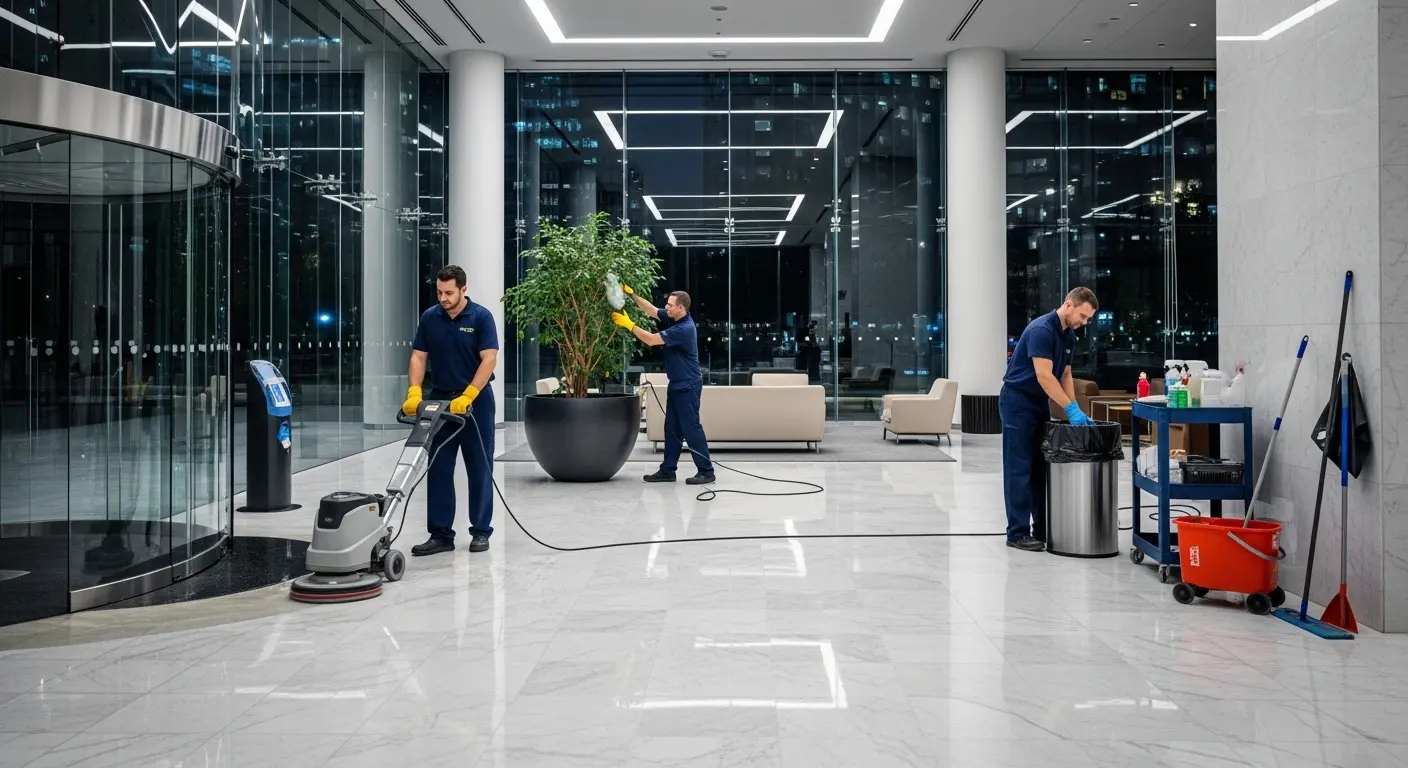
Maintaining a clean commercial building isn’t just about appearances, it’s a legal requirement and a critical factor for workplace safety. According to OSHA, slips, trips, and falls account for over 25% of reported workplace injuries in the U.S., while improper chemical handling contributes to nearly 20,000 occupational illnesses annually. Understanding and implementing OSHA cleaning standards for commercial buildings ensures your San Francisco facility is compliant, safe for employees and visitors, and efficiently maintained.
Even though OSHA has never provided a checklist of what should be included in janitorial services in San Francisco, it enforces several specific standards under 29 CFR 1910 that dictate how commercial buildings must be maintained for safety and health.
Failing to meet these specific safety standards leads to workplace hazards like slips, chemical exposure, infections, and long-term health issues. Non-compliance with the standards below also results in high penalties and fines.
General Requirements (29 CFR 1910.22)
OSHA has work area housekeeping regulations to keep all places of employment, including passageways and storerooms, clean, orderly, and in a sanitary condition. This falls under 29 CFR 1910.22 and requires:
- Maintaining floors in a clean and dry condition
- Providing proper drainage and false floors or mats to prevent slips.
- Clearing aisles and exit routes from obstructions like boxes, equipment, or trash.
OSHA Cleaning Checklist for Commercial Buildings:
- Floors: Keep clean, dry, and free of slip hazards.
- Aisles & Exits: Clear of boxes, equipment, or trash.
- Restrooms: Maintain hot/cold running water, soap, towels, and air blowers.
- Trash: Use leak-proof containers and empty daily.
- Chemical Handling: SDS available, proper labeling, and training on safe use.
- Bloodborne Hazards: Use EPA-registered disinfectants, PPE, and exposure control plans.
- PPE: Gloves, eye/face protection, respirators, and protective clothing provided and properly used.
- Ventilation: Maintain HVAC systems and store chemicals safely.
- Equipment: Ensure powered tools are safe and inspected regularly.
Sanitation (29 CFR 1910.141)
Sanitation standards focus on personal hygiene and the prevention of disease. This falls under 29 CFR 1910.141 and requires:
- Keeping restrooms in sanitary condition with hot and cold running water, soap, towels, and air blowers.
- Keeping leak-proof trash cans for food waste and emptying them at least once per working day.
- Constructing and maintaining workspaces to prevent the entrance of rodents, insects, and other vermin.
Hazard Communication (29 CFR 1910.1200)
One of the most important OSHA standards for commercial cleaning is the Hazard Communication Standard (often called HazCom) under 29 CFR 1910.1200.
Commercial cleaners use a variety of chemical products, from general-purpose cleaners to disinfectants and solvents. These products can be hazardous if not handled safely. HazCom ensures that workers:
- Know about the hazards of the chemicals they work with
- Have access to Safety Data Sheets (SDS)
- Understand how to read chemical labels and hazard information.
- Are trained on how to use chemicals safely
Employers must:
- Maintain Safety Data Sheets for every hazardous chemical used.
- Train employees on chemical risks, how to dilute them safely, and what Personal Protective Equipment (PPE), like gloves or goggles, is required.
- Ensure containers are properly labeled, whether original or secondary containers, like spray bottles.
Bloodborne Pathogens (29 CFR 1910.1030)
When cleaning areas where blood or other potentially infectious materials (OPIM) may be present, for example, in healthcare facilities, public restrooms, or injury sites, the Bloodborne Pathogens Standard (29 CFR 1910.1030) applies.
It is required that:
- Employers must develop and implement an Exposure Control Plan that outlines procedures for minimizing or eliminating employee exposure to blood.
- Workers must be trained to safely clean up spills involving blood or OPIM.
- Appropriate PPE must be provided, such as gloves, gowns, and eye protection, during cleaning.
- Only EPA registered disinfectants or diluted bleach solutions should be used on contaminated surfaces.
- Equipment and surfaces contaminated with blood or OPIM must be cleaned properly and promptly.
These standards aren’t only for commercial buildings that include a medical suite. If employees at your facility encounter blood that is common in gyms or high-traffic retail, you must follow the Bloodborne Pathogen Standard.
Personal Protective Equipment (29 CFR 1910 Subpart I)
Many cleaning tasks involve hazards that require Personal Protective Equipment (PPE). OSHA’s PPE standards under 29 CFR 1910 Subpart I require employers to conduct a hazard assessment of the workplace to identify what PPE is needed and provide it at no cost to employees.
The following PPE are mostly used:
- Gloves
They should be chemical resistant, disposable, or reusable, depending on risk.
- Eye and Face Protection
This includes goggles or face shields.
- Respirators
They are used to prevent the inhalation of hazardous airborne substances.
- Protective Clothing
They should be used to prevent skin exposure.
Just providing PPE isn’t all. Properly train workers to understand how to use, maintain, and dispose of protective gear correctly.
Read More: What’s Included in Commercial Janitorial Service?
Other OSHA Standards That May Apply
Beyond the main standards above, several other OSHA general industry standards may apply to cleaning operations in commercial buildings:
Ventilation and Indoor Air Quality
Proper ventilation is important when using cleaning chemicals, as it affects the air quality and increases respiratory problems. OSHA recommends maintaining HVAC systems and storing chemicals properly to prevent contamination of indoor air.
Equipment and Tools
Standards for tools and powered equipment, like floor buffers, lifts, and pressure washers, address hazards such as powered platforms and forklifts. These are covered under OSHA’s general industry standards for equipment safety.
Why OSHA Standards Matter for Commercial Buildings?
Compliance with OSHA cleaning standards is essential to:
Protect Workers
Proper training, chemical hazard communication, use of PPE, and protocols for infectious materials all help prevent injuries, illnesses, and health problems.
Reduce Liability
Noncompliance can lead to OSHA citations and penalties, legal liability, and increased insurance costs.
Increase Operational Efficiency
Safe practices mean fewer workplace accidents, less downtime, and improved productivity of cleaning staff, which can improve overall building operations.
What Happens If You Fail OSHA Standards?
Failing to meet OSHA cleaning standards can have serious consequences for your business:
- Citations and Fines: OSHA can issue penalties ranging from $7,000 to $15,000 per violation, depending on severity.
- Workplace Injuries: Poor housekeeping or improper chemical handling increases the risk of accidents, slips, and exposure-related illnesses.
- Legal Liability: Non-compliance can lead to lawsuits, workers’ compensation claims, and increased insurance premiums.
- Operational Impact: Unsafe conditions cause staff downtime, reduce productivity, and affect overall facility operations.
Who Is Responsible for OSHA Compliance?
OSHA compliance is primarily the responsibility of employers and facility managers, but professional janitorial staff play a key role in maintaining safety standards. Employers must:
- Train employees on workplace hazards and cleaning procedures.
- Provide and enforce the use of PPE.
- Maintain Safety Data Sheets (SDS) for all chemicals.
- Ensure proper handling of bloodborne pathogens and infectious materials.
Partnering with a professional cleaning service, like American Janitorial Services San Francisco, helps ensure that your facility meets OSHA standards consistently, reducing risk for both staff and visitors.
American Janitorial Services Follows All OSHA Cleaning Standards for Commercial Buildings
Only a professional janitorial company in San Francisco can ensure your workspace is spotless and fully compliant with OSHA cleaning and safety standards. At American Janitorial Services, we tailor the janitorial services in San Francisco we provide to meet the commercial health and safety requirements. It keeps your employees and customers safe, and the facility clean.
Reach out today and let our trained professionals develop a customized plan ensuring OSHA aligned sanitation and workplace safety.
Schedule A Walkthrough of Your Commercial Building and Get A Free Quote!